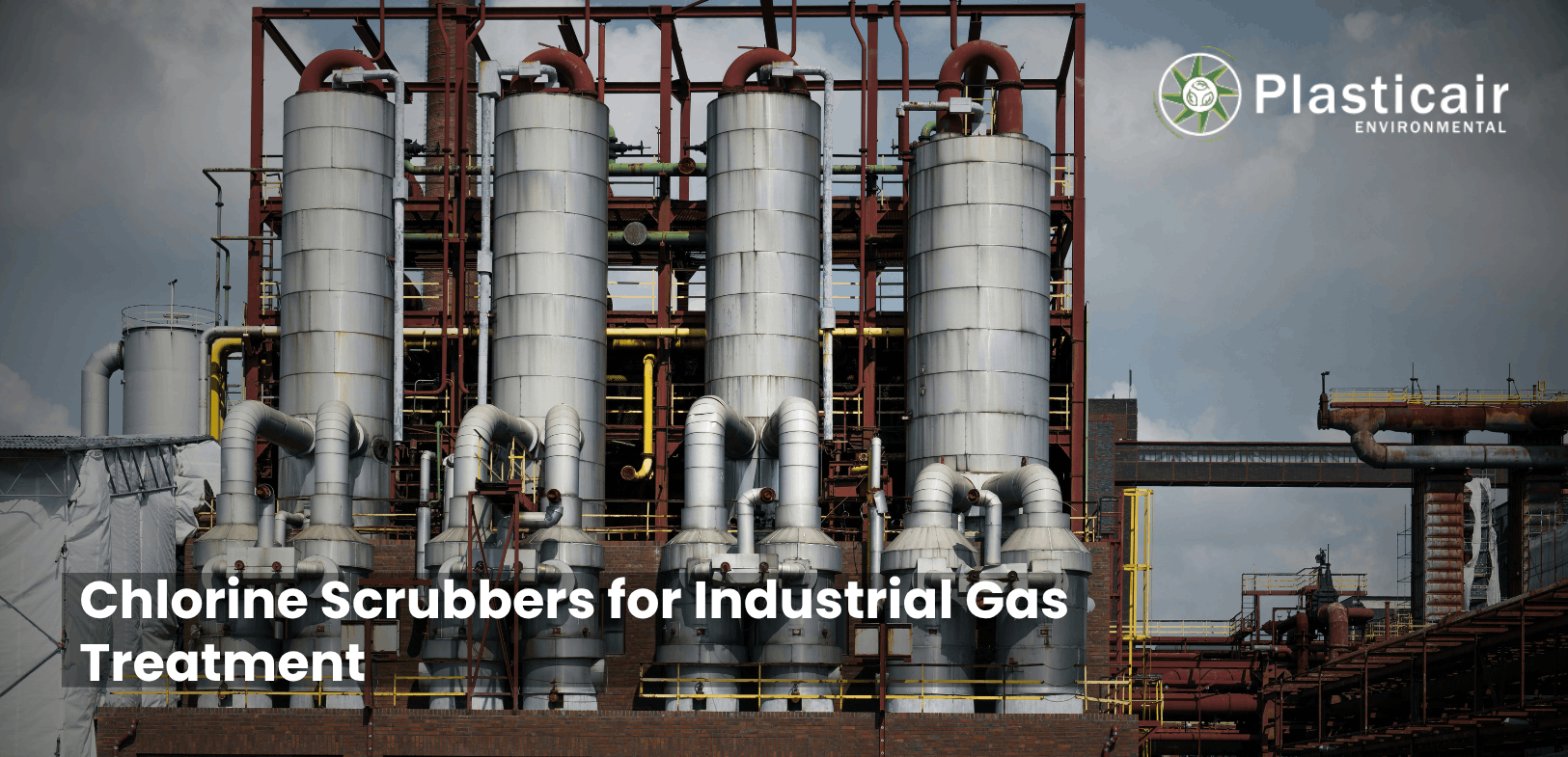
Chlorine Scrubbers for Industrial Gas Treatment
On a routine day at a water treatment plant, a corroded valve fails, and a cloud of chlorine gas begins spreading across the facility floor. Alarms sound, workers evacuate, and the surrounding neighborhood is placed under a shelter-in-place notice within minutes. Scenarios like this are more common than most people realize, and they are almost always preventable. Chlorine scrubbers, sometimes called Cl2 scrubbers, exist for exactly this reason: to capture and neutralize Cl2 gas before it ever has the chance to escape into the air.
Chlorine's danger is nothing new. It has a long, well-documented history as one of the most hazardous industrial gases in use today, and even a small leak can put workers, equipment, and entire communities at risk within seconds. This is why chlorine scrubbers are treated as essential rather than optional in any facility that uses, stores, or produces Cl2.
The Real Risk of Unmanaged Chlorine Gas
Chlorine leaks rarely come from a single dramatic failure. More often, they build slowly: a valve seal degrades, a gasket wears thin, or ductwork corrodes just enough to let gas escape gradually before anyone notices. OSHA sets the permissible exposure limit for chlorine at just 1 ppm as a ceiling value, reflecting how little room for error this gas allows. Left unmanaged, chlorine gas causes respiratory damage and chemical burns in workers, accelerates corrosion in nearby equipment, and puts facilities at risk of EPA and OSHA violations. In dense or urban areas, even a contained leak can trigger community complaints, shelter-in-place orders, or regulatory shutdowns that halt operations for days.
None of this is inevitable. It is the direct result of exhaust streams that were never properly treated for chlorine gas treatment in the first place.
How Chlorine Scrubbers Stop the Problem Before It Starts
At the center of every chlorine scrubber is a tower built from Fiberglass Reinforced Plastic (FRP), chosen specifically because it can withstand years of exposure to one of the most corrosive gases in industrial use. Inside the tower, specialized packing media forces the gas stream into close contact with a caustic scrubbing solution, delivered through a dedicated chemical injection system engineered for precise chemical gas scrubbing.
As the gas moves through the tower, it reacts with the scrubbing solution and converts into stable, non-hazardous compounds instead of escaping into the atmosphere. Any liquid droplets left behind are captured by a mist eliminator, so only clean, treated air exits the system, meeting the standards required for reliable chlorine exhaust control. It is a quiet, continuous process, but it is the difference between a routine operating day and the kind of incident described above.
Industries Where the Stakes Are Highest
Some industries face this risk daily rather than occasionally. Water treatment plants use chlorine for disinfection and must manage residual gas continuously. Chemical manufacturers that produce or handle chlorine compounds face constant exposure risk on the production line. Pulp and paper mills generate chlorine byproducts during bleaching, while pharmaceutical manufacturers handle chlorine in production environments where both worker safety and product integrity are on the line. Semiconductor and electronics facilities rely on chlorine-based etching and cleaning processes that demand tightly controlled exhaust.
For all of these industries, industrial chlorine removal is not a compliance checkbox. It is the barrier between normal operations and a shutdown.
What Changes When Facilities Get It Right
Fewer Injuries, Less Downtime
Facilities with properly sized chlorine scrubbers see far fewer worker exposure incidents, which means fewer injuries, fewer investigations, and less unplanned downtime.
Equipment That Lasts Longer
Removing corrosive Cl2 before it reaches ductwork, fans, and structural components extends the working life of everything downstream of the scrubber.
Compliance That Doesn't Depend on Luck
Meeting air quality and emissions regulations becomes a matter of design rather than chance, reducing the risk of fines, violations, or forced shutdowns.
Fewer Complaints From the Community
Chlorine's sharp, easily detectable odor makes it one of the fastest ways to generate community complaints. Scrubbing it effectively keeps that risk off the table entirely.
Lower Costs Over Time
Preventing corrosion damage and avoiding compliance penalties both add up to real savings compared to managing chlorine exposure after the fact.
Built to Withstand the Corrosion Chlorine Leaves Behind
Chlorine is one of the most corrosive gases an industrial system will ever encounter, which is why chlorine scrubbers are almost always paired with FRP fans and fiberglass ductwork rather than standard metal components. FRP construction resists the corrosive byproducts formed during neutralization, protecting the entire exhaust system, not just the scrubber tower, from the kind of gradual wear that leads to leaks in the first place.
Choosing the Right System Before a Problem Starts
The right chlorine scrubber depends on a few key factors:
-
Gas Concentration and Flow Rate: Higher concentrations may require a taller tower or additional packing media for full contact time.
-
Packing Media Type: Different media trade off efficiency against pressure drop.
-
Corrosion Resistance Requirements: Facilities with especially aggressive gas streams may need thicker FRP construction or specialized resin systems.
-
Customization Needs: Flow rate, footprint, and available space all affect whether a vertical or horizontal packed bed design is the better fit, a configuration covered in more detail in our guide to packed bed scrubbers.
Choosing the right system before an incident happens is always the easier path. Retrofitting after a leak, a violation, or a shutdown rarely is.
Maintenance and Inspection Checklist
The valve failure described at the start of this article is exactly the kind of incident a consistent inspection routine is designed to prevent. Most chlorine scrubber failures build gradually, which makes a regular maintenance schedule one of the most effective safety investments a facility can make:
-
Inspect the FRP Tower and Ductwork: Check regularly for surface cracking, discoloration, or resin degradation caused by long-term exposure to chlorine gas and its byproducts.
-
Check Packing Media Condition: Look for channeling, fouling, or media breakdown, all of which reduce gas-liquid contact and lower treatment efficiency over time.
-
Monitor the Chemical Injection System: Confirm caustic reagent levels, pump function, and injection rates are holding steady at the settings required for consistent neutralization.
-
Test Mist Eliminator Performance: Inspect for buildup or blockage that could allow liquid carryover into the discharge stream.
-
Verify Seals and Gaskets: Replace worn seals before they become a source of the slow, unnoticed leaks that cause most real-world incidents.
-
Review Discharge Readings: Test exhaust output on a regular schedule to confirm the system is still performing within permitted emission limits.
-
Schedule Preventive Maintenance: Set a recurring inspection cadence rather than waiting for a performance issue to appear. Corrosion damage is far cheaper to prevent than to repair.
The plant in the scenario above did not have to end that way. With the right chlorine scrubber in place, chlorine gas treatment becomes a routine, well managed part of daily operations rather than a risk waiting to surface. Whether your facility handles water treatment, chemical manufacturing, or electronics production, the right system keeps chlorine contained before it ever becomes a headline.
Plasticair Environmental designs corrosion-resistant scrubbing systems built for the toughest gas streams. Visit our Products page to explore our full range.
Frequently Asked Questions (FAQs)
A chlorine scrubber is an air pollution control device that removes chlorine gas from industrial exhaust using chemical reagents and specialized packing media, converting the toxic gas into safer, stable byproducts before clean air is released.
The gas stream passes through packing media where it contacts a caustic scrubbing liquid. A chemical reaction neutralizes the chlorine, and any remaining liquid droplets are captured by a mist eliminator before the treated air exits the system.
Water treatment plants, chemical manufacturing facilities, pulp and paper mills, pharmaceutical manufacturers, and semiconductor plants are among the heaviest users of chlorine scrubbers.
Most chlorine scrubbers are built from Fiberglass Reinforced Plastic (FRP) due to its resistance to the corrosive byproducts formed during chlorine neutralization.
Yes. Scrubber height, packing media type, and vertical versus horizontal configuration can all be adjusted to match a facility's specific gas flow rate and space constraints.
Yes. Chlorine has a sharp, easily detectable odor, so removing it also resolves nuisance odor concerns tied to a facility's operations, not just the safety and compliance requirements.
Most facilities inspect key components such as packing media, seals, and the chemical injection system on a monthly basis, with a more thorough structural inspection of the FRP tower and ductwork at least once or twice a year, depending on gas concentration and operating hours.


